
How to Exchange USDT for TRX: Address, Network, Fees, and a Two-Pass Safety Check
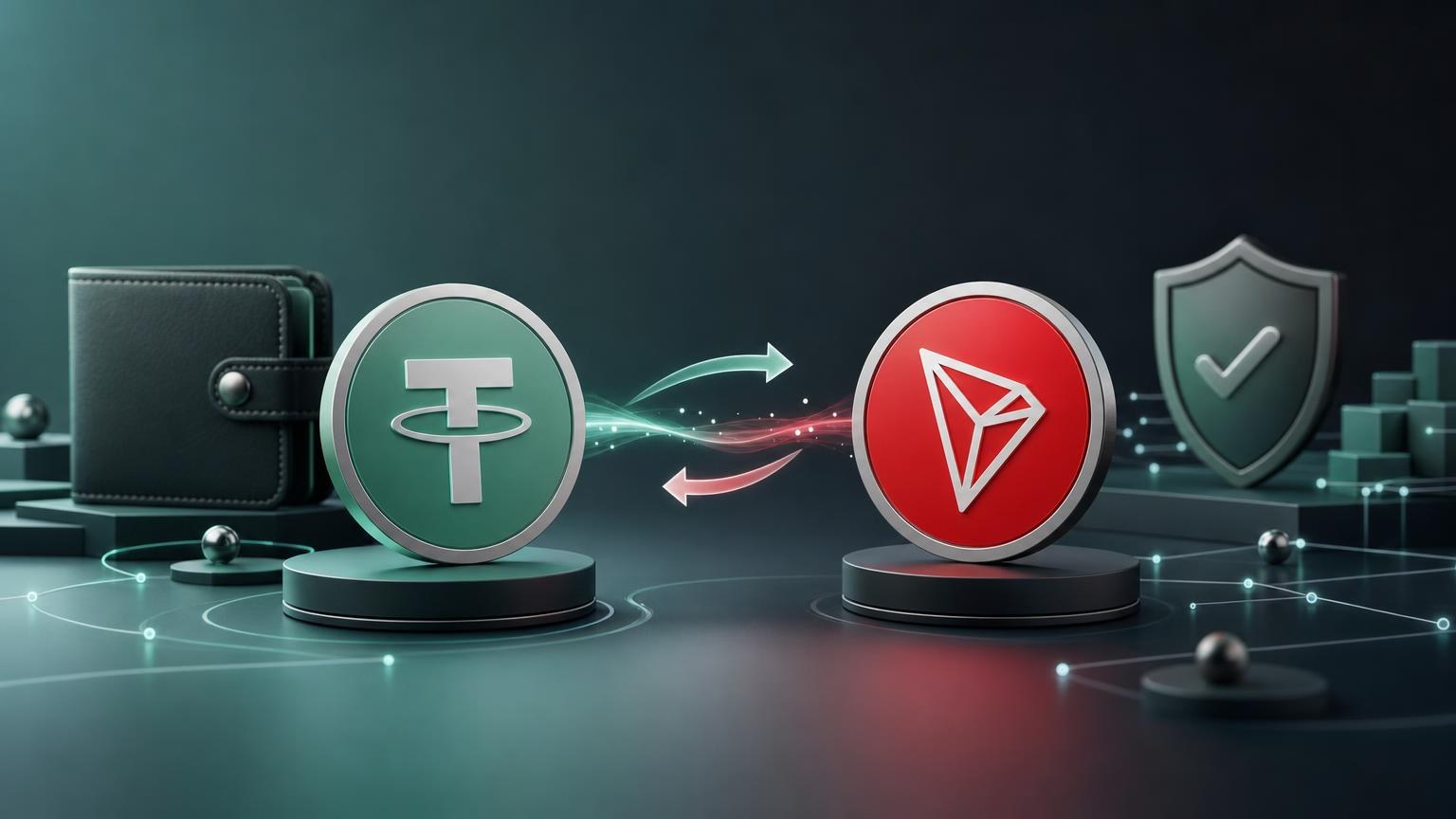
Exchanging USDT for TRX normally means sending USDT to an exchange deposit address and receiving TRX at a TRON address. The difficult part is not the arithmetic but the coordination of several independent systems: the exchange interface, the sending wallet or platform, the selected USDT network, and the receiving TRON account. A valid-looking address can still belong to the wrong network or recipient.
The procedure below is a pre-operation audit rather than a guarantee. It can reveal common contradictions before funds are sent, but it cannot eliminate software failures, account compromise, phishing, compliance delays, market movement, or the consequences of incorrect data. Treat every unresolved discrepancy as a reason to pause.
Express check: stop signals before opening an order
Do not proceed to the full checklist if any of these conditions is present:
- The domain differs from the one you intended to visit, was opened from an unsolicited message, or contains substituted characters.
- The order direction does not clearly read as sending USDT and receiving TRX.
- The service does not explicitly show that the required pair and the intended USDT network are currently available.
- The USDT network selected in the sending wallet differs from the network named in the order.
- The TRX destination address changes after copying, pasting, scanning, or switching windows.
- A message asks for a seed phrase, private key, wallet backup, remote access, or wallet-screen sharing.
- The amount to be received, the applicable fees, or the rate-calculation method is hidden or changes without a visible explanation.
- Someone combines the exchange with a promise of guaranteed returns, risk-free income, or mandatory follow-up transfers.
If none of these signals appears, continue with two separate passes. The first validates the operation’s context. The second repeats the critical fields immediately before the irreversible action.
Why the USDT network and TRX address must be checked separately
USDT exists on multiple blockchains, including TRON as a TRC-20 token. The ticker alone therefore does not identify the transfer route: “USDT” and “USDT on TRON” are not sufficient substitutes for an explicitly selected network. Tether’s supported-protocol information lists USD₮ on TRON and identifies its TRC-20 contract, illustrating why the token name, blockchain, and contract identity are separate data points. [1]
TRX is the native asset of the TRON network. A standard user-facing TRON address in Base58Check format begins with T. That prefix is only a format check: it does not prove ownership, confirm that the recipient supports the transfer, or show that the address was copied correctly. TRON also represents addresses internally in hexadecimal form, so the format shown by a technical tool may differ from the format displayed by a wallet. [2]
Two addresses can look similar while differing by one or more characters. Always compare the beginning, middle, and end rather than checking only the first and last few characters. If the receiving platform generates the address, verify it in that platform’s authenticated deposit screen rather than relying on an old screenshot, chat message, or transaction history.
Two-pass pre-operation verification card
Pass 1: validate the operation context
This pass should be completed before funds are prepared or an order is created. It checks whether every system describes the same intended operation.
| What to verify | Independent confirmation | What a discrepancy means | Default outcome |
|---|---|---|---|
| Domain and session: the site name, spelling, secure connection, and account session match the service you intended to use. | Use a trusted bookmark, manually entered domain, or a previously verified record. Do not treat the padlock icon alone as proof of identity. | A different spelling, unexpected redirect, new login request, or unexplained browser warning may indicate phishing or a compromised session. | Stop until the domain and session are independently verified. |
| Exchange direction: USDT is the asset being sent and TRX is the asset being received. | Compare the order form, order summary, and wallet action. The sending wallet should show an outgoing USDT transfer, while the receiving field should identify TRX. | Reversed fields can create the wrong order or produce an address that is unsuitable for the intended asset. | Clarify and recreate the order if necessary. |
| Current pair availability: the service currently supports the USDT-to-TRX direction. | Check the live order interface before preparing the transfer. The service supports USDT and TRX as assets, but this alone does not establish that every pair, network, or direction is available at a particular moment. | An unavailable direction may mean the operation cannot be created under the intended conditions. | Stop if the pair cannot be selected explicitly. |
| USDT source network: the network in the sending wallet or withdrawal platform exactly matches the network accepted by the order. | Read the full network name in both interfaces. Do not infer it from the USDT ticker, a familiar address, or a previous transfer. | A mismatch means the transaction may arrive on a blockchain the recipient is not monitoring. Recovery may be difficult or impossible and must never be assumed. | Stop on any network mismatch. |
| TRX receiving network: the destination wallet or platform accepts native TRX on TRON. | Open the authenticated TRX receive or deposit screen in the destination wallet. Check the asset and network labels together. | A deposit page for another asset, a wrapped version of TRX, or another blockchain is not equivalent to a native TRX address. | Stop until the destination explicitly supports the intended TRX transfer. |
| Address source: the TRX receiving address was generated by the wallet or platform that should receive the funds. | Compare the address displayed on the receiving device with the address entered in the order. For a hardware wallet, use the address shown on the hardware device where supported. | An address obtained only from the clipboard, chat, email, search advertisement, or third party may have been substituted. | Stop if the original address cannot be reproduced. |
| Quote structure: the interface identifies the amount sent, the estimated or fixed amount received, the applicable rate model, and any displayed service or network deductions. | Compare the order form with its final preview and the sending platform’s withdrawal screen. Record whether the quote may change before settlement. | A missing or unexplained component prevents calculation of the expected result. A changed quote may reflect market movement, order expiry, or altered conditions rather than an address error. | Clarify before creating or funding the order. |
| Limits and conditions: the amount fits the currently displayed minimum, maximum, timing, and funding rules. | Use the live order interface and current terms, not an old article, cached page, screenshot, or previous order. | An amount outside the applicable conditions can delay processing, require support review, or cause recalculation under the service’s rules. | Clarify; do not split transfers unless the service explicitly instructs you to do so. |
| Verification requirements: any applicable compliance steps are understood before funds are sent. | Check the requirements displayed for the particular direction and order. They may depend on the operation and the results of compliance checks. | An unexpected request does not automatically prove fraud, but a request for wallet secrets is never a legitimate identity or compliance check. | Continue checking only if the request is shown within the verified service and does not expose wallet secrets; otherwise stop. |
| Information freshness: network, fee, availability, and order data come from current interfaces. | Refresh the order page and reopen the withdrawal or receive screen. Use the blockchain explorer for on-chain facts after broadcast. | Old instructions can contain expired addresses, unsupported networks, or obsolete fee assumptions. | Clarify every material difference before proceeding. |
Pass 2: repeat the critical fields immediately before sending
Complete this pass after the order has generated its payment details but before approving the USDT withdrawal or signing the transaction. Do not rely on the first pass from memory.
| What to verify | Independent confirmation | What a discrepancy means | Default outcome |
|---|---|---|---|
| USDT deposit address: every character in the wallet’s recipient field matches the address in the active order. | Compare the order page with the final signing or withdrawal screen. Check several segments across the entire address, not only its prefix and suffix. | A difference after copying may indicate a clipboard substitution, manual error, stale order, or changed payment instruction. | Stop, clear the field, and re-establish the address from the verified order. |
| USDT network: the final wallet confirmation names the same blockchain selected in the order. | Read the network label at the final approval stage. If the order requires TRC-20 USDT, the sending interface must explicitly use the TRON network rather than another USDT network. | The same token ticker on another blockchain does not make the routes compatible. | Stop; do not approve the transaction. |
| Memo, tag, or payment identifier: any identifier explicitly supplied by the order is present and exact. | Compare the active order with the dedicated memo or tag field in the sending interface. If no identifier is provided, do not invent one. | A missing required identifier can prevent automatic assignment of the payment even when the blockchain transfer reaches the correct address. | Stop when a required field is missing or the wallet cannot transmit it as instructed. |
| Amount sent: the USDT amount in the final wallet screen matches the order’s payment amount and accounts for the withdrawal method. | Compare the order’s required deposit with the amount the recipient will receive, not merely the amount deducted from the sender’s balance. | A platform may display its withdrawal charge separately or deduct it from the entered amount. Sending less than the order expects can create a shortfall. | Clarify the fee treatment before approval. |
| Expected TRX amount: the latest order preview still shows an understandable result after all displayed deductions. | Refresh the order summary and compare it with the previously recorded quote. Check whether the quote is fixed, floating, expired, or recalculated. | A change may result from market movement, timing, fee updates, or changed order conditions. It should not be accepted automatically merely because the address is correct. | Continue checking if the change is explained and acceptable; otherwise clarify. |
| TRX receiving address: the destination in the order still matches the current receive screen of the intended wallet or platform. | Reopen the destination’s authenticated TRX receive page. Where possible, verify the address on a second trusted display or hardware device. | A changed address may belong to another account, another session, malware, or a newly generated deposit route. | Stop until the intended recipient is established. |
| Fee funding: the sending method can pay its required blockchain or withdrawal cost without reducing the transfer below the required amount. | Read the wallet’s final fee estimate or the platform’s withdrawal summary. If sending TRC-20 USDT from a self-custody TRON wallet, check how that wallet covers Energy and Bandwidth. | An underfunded transaction can fail, while a deducted withdrawal charge can reduce the amount reaching the order address. | Clarify the actual recipient amount before signing. |
| Order validity: the payment window, status, and address have not expired or changed. | Use the active order page immediately before sending. Do not fund an order marked cancelled, expired, completed, or awaiting different action. | Payment to an inactive or replaced instruction may require manual investigation and may not be processed under the original quote. | Stop and obtain current instructions. |
| Final device state: no unexpected extension, pop-up, remote-control session, or third-party instruction is influencing the transfer. | Close unrelated tabs and messaging apps, disable remote access, and compare the final transaction details on the signing device itself. | Unexpected interference can indicate phishing, malicious software, or social engineering. | Stop and secure the device before attempting the operation again. |
After completing both passes without unresolved contradictions, one possible next step is to check the currently available USDT-to-TRX exchange terms. Availability, supported networks, limits, verification conditions, and displayed amounts should still be reviewed in the live order interface.
How fees arise in a USDT-to-TRX exchange
“Commission” can refer to several different deductions. Combining them into a single percentage often produces an incorrect expectation:
- Exchange pricing: the quoted USDT-to-TRX rate may include a service charge or spread. The relevant figure is the current amount shown as receivable under the order’s stated conditions.
- USDT withdrawal or sending cost: a custodial platform may set its own withdrawal charge. A self-custody wallet instead prepares an on-chain transaction and displays the resources or fee required by the selected network.
- TRON resource cost: a TRC-20 USDT transfer invokes a smart contract. TRON smart-contract transactions consume Bandwidth and Energy; if available resources are insufficient, TRX can be burned to cover the resource cost. The exact requirement depends on the transaction and current network parameters, so a fixed value should not be assumed from an old example. [3]
- Outgoing TRX cost: the exchange must deliver TRX to the receiving address. Whether that cost is included, deducted, or shown separately must be read from the current order rather than inferred.
A common practical issue occurs when USDT is held in a self-custody TRON wallet but the account has no usable TRX or delegated resources. The wallet may then be unable to broadcast the TRC-20 transfer under the expected conditions. By contrast, a custodial platform may charge a withdrawal fee using its own model. These mechanisms are not interchangeable, so the final withdrawal screen is the appropriate source for the sender-side amount.
Decision outcomes
| Outcome | When it applies | Action |
|---|---|---|
| Continue checking | The domain, direction, networks, addresses, amount, identifiers, and current conditions agree, but the transaction has not yet been sent. | Repeat the critical address, network, amount, and order-status fields at the final wallet confirmation. This outcome is permission to continue the audit, not a declaration of safety. |
| Clarify | The contradiction concerns a rate change, fee treatment, compliance step, memo requirement, limit, expiration, or another condition that may have a legitimate explanation. | Pause without sending. Use the verified service interface or support channel and preserve the order identifier. Resume only after the instruction is specific and consistent. |
| Stop | The domain is doubtful, the network differs, an address has changed, a required identifier is missing, wallet secrets are requested, or the recipient cannot be independently established. | Do not sign, approve, or broadcast. Close the session, secure the device if necessary, and rebuild the operation from a trusted starting point. |
Control route before, during, and after the exchange
Before the transfer
- Open the intended service through a trusted route and select USDT as the sent asset and TRX as the received asset.
- Confirm that the required USDT network is available for this specific direction.
- Generate the TRX receiving address in the destination wallet or platform.
- Review the displayed amount, fee treatment, limits, quote type, order validity, and applicable verification requirements.
- Complete Pass 1, create the order, and then complete Pass 2 using the newly generated payment data.
While the transfer is pending
After broadcast, preserve the transaction ID, usually called a txid or transaction hash. Use it to inspect the transfer in a TRON blockchain explorer when the USDT payment was made through TRON. An explorer can show the sender, recipient, token-transfer details, execution result, resource use, and confirmation state. TRON documentation distinguishes inclusion in a block from final confirmation, and a smart-contract transfer must also have a successful execution result. [4]
Compare the explorer record with the order rather than relying only on a wallet’s “sent” label. The recipient address, token, amount, transaction result, and txid should correspond to the active order. Do not send a second payment merely because the order page has not updated immediately.
After confirmation
Check the order status and then verify the incoming TRX in the destination wallet or with the outgoing transaction ID supplied by the exchange, if available. Confirmation of the USDT payment and delivery of TRX are two different blockchain events. Keep their identifiers separate.
Compare the received TRX amount with the final applicable order calculation, taking account only of deductions that were disclosed in the order. If the difference is unexplained, preserve the records and move to diagnosis instead of starting another exchange.
If the status is delayed, the amount differs, or the data changes
A delay or mismatch does not identify the cause by itself. Work through the evidence in this order:
- Check whether the USDT transaction exists. Search the txid in the explorer for the network actually used. If there is no transaction, the wallet or withdrawal platform may not have broadcast it.
- Check execution and confirmation. For TRC-20 USDT, an on-chain record can exist even if the smart-contract execution failed. Look for a successful result as well as confirmation. TRON’s transaction interfaces expose the transaction hash and execution result for this purpose. [3]
- Compare the recipient. Verify that the on-chain destination exactly matches the deposit address assigned to the order.
- Compare the token and network. Confirm that the transaction transferred the intended USDT contract on the blockchain accepted by the order, not another token with the same ticker or USDT on another network.
- Compare the amount received by the address. Use the explorer’s transferred amount, not only the amount deducted from the sending account.
- Check the memo or identifier. If the order required one, confirm that it was transmitted exactly as instructed.
- Review order timing. Record whether the order expired, was recalculated, or changed status before the transaction was detected.
- Contact support through the verified domain. Provide the order identifier, txid, sending and receiving public addresses, asset, network, amount, and relevant timestamps. Do not provide a seed phrase, private key, authentication code, full identity-document copy unless requested through a legitimate and applicable compliance process, or unrelated personal data.
If USDT was sent through the wrong network or to an incorrect address, do not assume that the transfer can be reversed. Blockchain evidence can establish what happened, but it does not grant control over the recipient address or oblige a platform to support recovery. Avoid “recovery agents” who request advance crypto payments, wallet secrets, or remote access.
Threats specific to this operation
Phishing and false exchange pages
A copied interface can display plausible rates and generate an attacker-controlled deposit address. Search advertisements, direct messages, and urgent support replies are unsuitable as sole sources of a domain. Start from a trusted record and confirm that later support conversations remain within the same verified service context.
Clipboard address substitution
Malicious software can replace a copied crypto address with another address. Pasting twice does not detect substitution if the clipboard is already compromised. Compare the pasted value with the original source across multiple character groups and, where possible, verify it on an independent display.
Wrong USDT network
The word “USDT” does not establish the blockchain. Selecting TRON, Ethereum, or another supported protocol creates transactions on different networks. The accepted network must match at the order level and at the wallet’s final approval screen. [1]
Seed phrase or private-key exposure
An exchange requires a public receiving address, not authority over the receiving wallet. A seed phrase or private key gives control over wallet assets and must not be entered into an exchange form, support chat, remote-access tool, or transaction explorer. If a secret has already been exposed, merely cancelling the exchange does not secure the wallet; use a clean environment and an uncompromised wallet-management procedure.
Guaranteed-return claims
A USDT-to-TRX exchange converts one asset into another; it does not create guaranteed yield. Claims that the swap must be followed by a “validation payment,” “liquidity deposit,” or guaranteed-profit program are separate risk signals. TRX can change in market value, and an exchange result should not be treated as an assurance of profit.
Minimal record to keep after the operation
Retain only the information needed to trace the exchange and explain a discrepancy:
- the order identifier;
- the USDT payment txid and the network used;
- the outgoing TRX txid, if supplied;
- the public sending and receiving addresses;
- the sent USDT amount and the final TRX amount shown by the order;
- the relevant status timestamps;
- a copy of the order conditions or status page that does not expose unnecessary personal data.
Do not store seed phrases, private keys, wallet backup files, one-time authentication codes, passwords, or unrelated identity data with the order record. The practical endpoint of the check is a reproducible chain of public transaction evidence and order identifiers—not a collection of secrets.